
The world’s largest non-governmental organization, Rashtriya Swayamsevak Sangh, remains a center of attraction and curiosity for learned people. Today, learned people who keep an eye on the events taking place on the political scene of the world are aware of this Sangh power of India.
The Rashtriya Swayamsevak Sangh (RSS) was established on 27th September 1925 in Nagpur, Maharashtra by Dr. Keshav Baliram Hedgewar, a physician and nationalist. The backdrop of its formation was the complex socio-political situation of India during the early 20th century, especially after the end of World War I and the rise of movements against British colonial rule.
India at that time was witnessing growing unrest due to British repression and the failure of moderate political movements. The Khilafat Movement and Non-Cooperation Movement led by Mahatma Gandhi had temporarily united Hindu and Muslim communities, but soon religious divisions deepened. Communal tensions and riots were on the rise, and Hedgewar believed that a strong, united Hindu society was essential to ensure India’s independence and cultural integrity.
Dr. Hedgewar was influenced by the freedom movement and had earlier been associated with revolutionary groups. However, he felt that political freedom alone would not be enough unless Indian society, particularly the Hindu community, was morally and physically strong. He envisioned an organization that would work at the grassroots level to build discipline, unity, and national character.
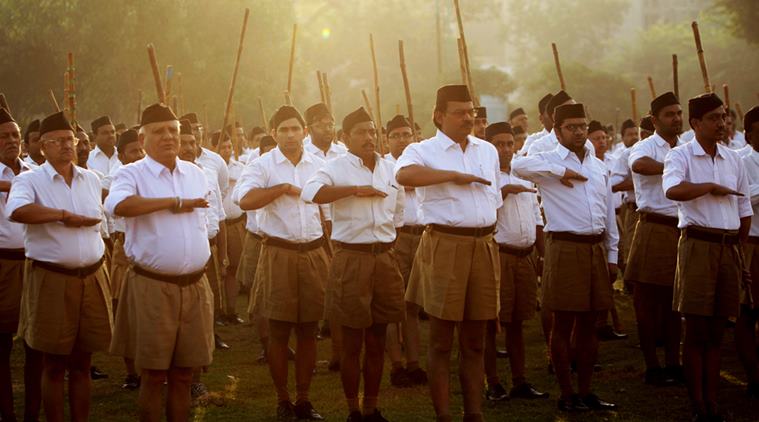
Thus, the RSS was founded as a socio-cultural organization, not a political one, with the aim of organizing the Hindu community to promote cultural values, patriotism, and selfless service. The organization introduced a daily gathering called Shakha, where physical training, discipline, and ideological education were imparted to swayamsevaks (volunteers).
Over time, the RSS grew into one of the largest voluntary organizations in the world, with numerous affiliated bodies in sectors like education, health, and rural development. Despite facing bans and criticism during certain political events, it has continued to influence Indian society and politics, shaping the ideology of many prominent leaders and movements. Its foundation reflects a blend of cultural nationalism, social reform, and discipline-based grassroots organization.